
Nigerian Dried Hibiscus Grades and Specifications: Grade A, Grade B, Tea-Bag Cut and Powder Explained
Hibiscus offers use shorthand that means different things to different sellers. Here is how Nigerian dried hibiscus is actually graded, what each specification line means, and how to write one that protects you.
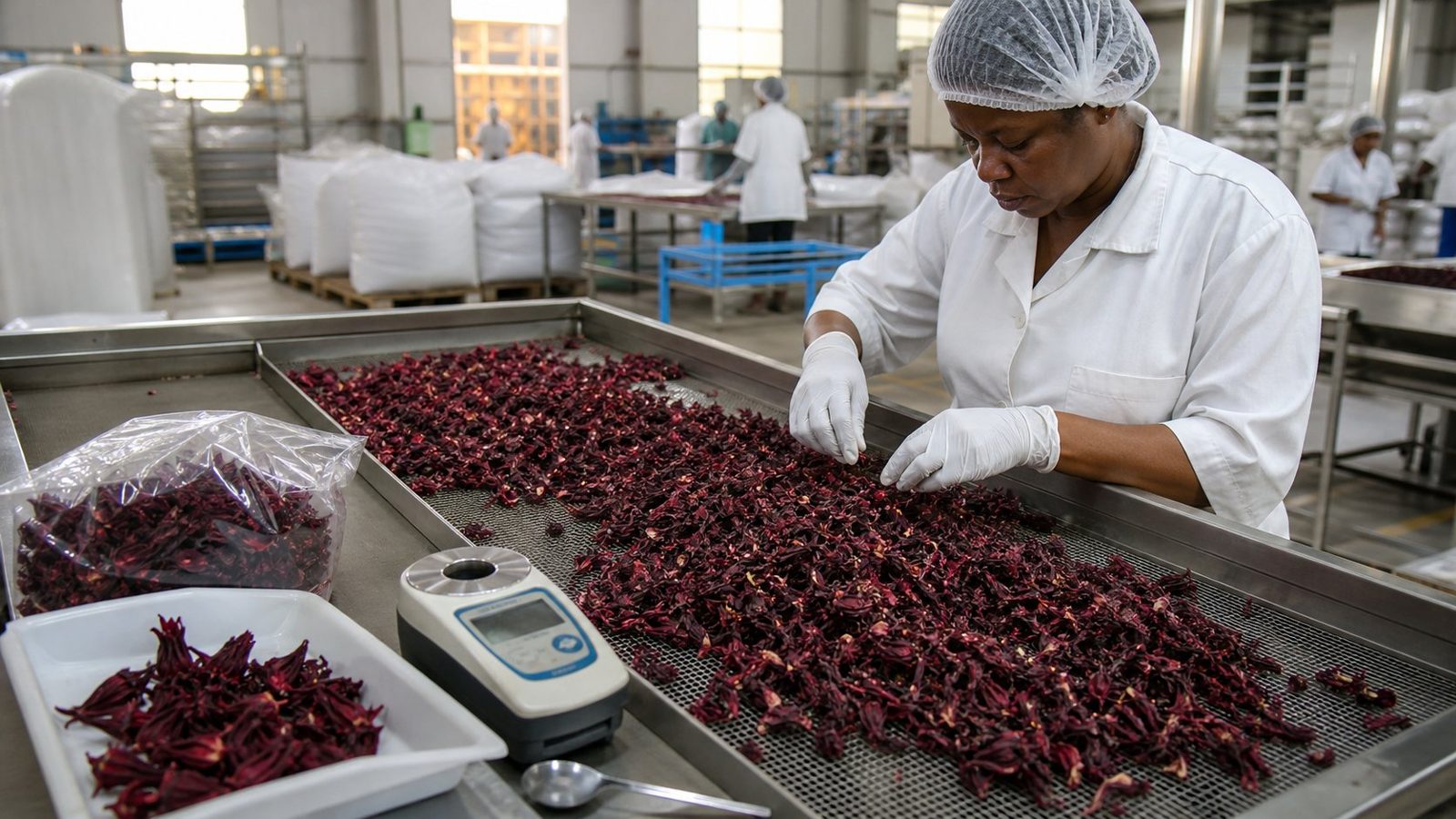
There is no single international grading authority for dried hibiscus. Quality is defined contract by contract, using a handful of parameters that every experienced buyer and seller understands. This guide explains them so that you can read a Nigerian hibiscus offer — and write a specification — with confidence.
What is being graded
The product is the dried calyx of Hibiscus sabdariffa — the fleshy red sepals that surround the seed pod — not the petal. After harvest the calyx is separated from the seed capsule with a hollow punch or by hand, then sun-dried from roughly 85% moisture to around 10%. Everything in a specification is about how cleanly that was done and how well the colour and acidity survived drying.
Grade A, Grade B and "sifted"
Grade A (also "sifted", "premium" or "beverage grade") means whole or largely whole calyces that have been passed over screens to remove dust, broken pieces and seeds, then hand-picked for stems and foreign matter. Colour is deep red to dark burgundy, not brown. Grade B (or "unsifted", "industrial", "extraction grade") is the remainder: broken, under-sized and mixed calyces with a higher admixture tolerance. The colour and acidity are the same — the difference is appearance and cleanliness, which is why extraction buyers happily take Grade B at a lower price.
Tea-bag cut and powder
Tea-bag cut (TBC) is Grade A that has been cut and screened to a particle band, most commonly 1–4 mm, with fines aspirated out. Specify the sieve range (for example "pass 4 mm, retain 1 mm, fines below 0.5 mm max 2%"). Powder is milled calyx; specify mesh size (60–80 mesh is common), colour and moisture, and insist on lined packaging because powder absorbs moisture quickly.
The core specification lines
- Moisture (max): 10–12% is standard. Above 12% there is a real risk of mould in transit.
- Admixture / foreign matter (max): stems, seeds, sand, dust and other plant material. 1–2% for Grade A; agree a separate figure for Grade B.
- Colour: "deep red / dark red" against a retained sample. Brownish lots were over-dried, rain-damaged or old.
- Total ash and acid-insoluble ash: ash tells you about mineral content; acid-insoluble ash is essentially sand. Typical limits are around 10% and 2% respectively, but set them to your own standard.
- Infestation and mould: nil live insects, no visible mould. Mexico-bound cargo in particular is inspected for khapra beetle (Trogoderma granarium).
- Microbiology: total plate count, yeast and mould, E. coli and Salmonella to the destination standard.
- Pesticide residues and heavy metals: EU MRLs, FDA tolerances or COFEPRIS limits, as applicable; lead and cadmium are the usual heavy-metal lines.
Writing a specification that protects you
State every number, state the test method where it matters (oven moisture, not meter), name the laboratory or inspection agency that will certify it, and attach a retained sample that both parties sign. Specify packaging (bag weight, liner, bale compression) and fumigation requirements explicitly. Finally, agree what happens if the shipment is off-spec — a price allowance scale is far easier to enforce than a rejection clause.
Our specification sheets follow this structure for all four grades. Request a quotation and we will send the full sheet for your market.
Sourcing dried hibiscus from Nigeria?
Get a written quotation and specification within two business days.
More Insights
Ready to Source Export-Grade Dried Hibiscus from Nigeria?
Tell us your grade, tonnage, packing and destination port. Our export team will prepare a detailed FOB or CIF quotation and a sample plan.