
Nigeria Hibiscus Season and Harvest Calendar: When to Buy Roselle for the Best Quality and Price
The timing of your hibiscus purchase affects colour, moisture, availability and price. Here is the Nigerian roselle calendar from planting to peak export, month by month.
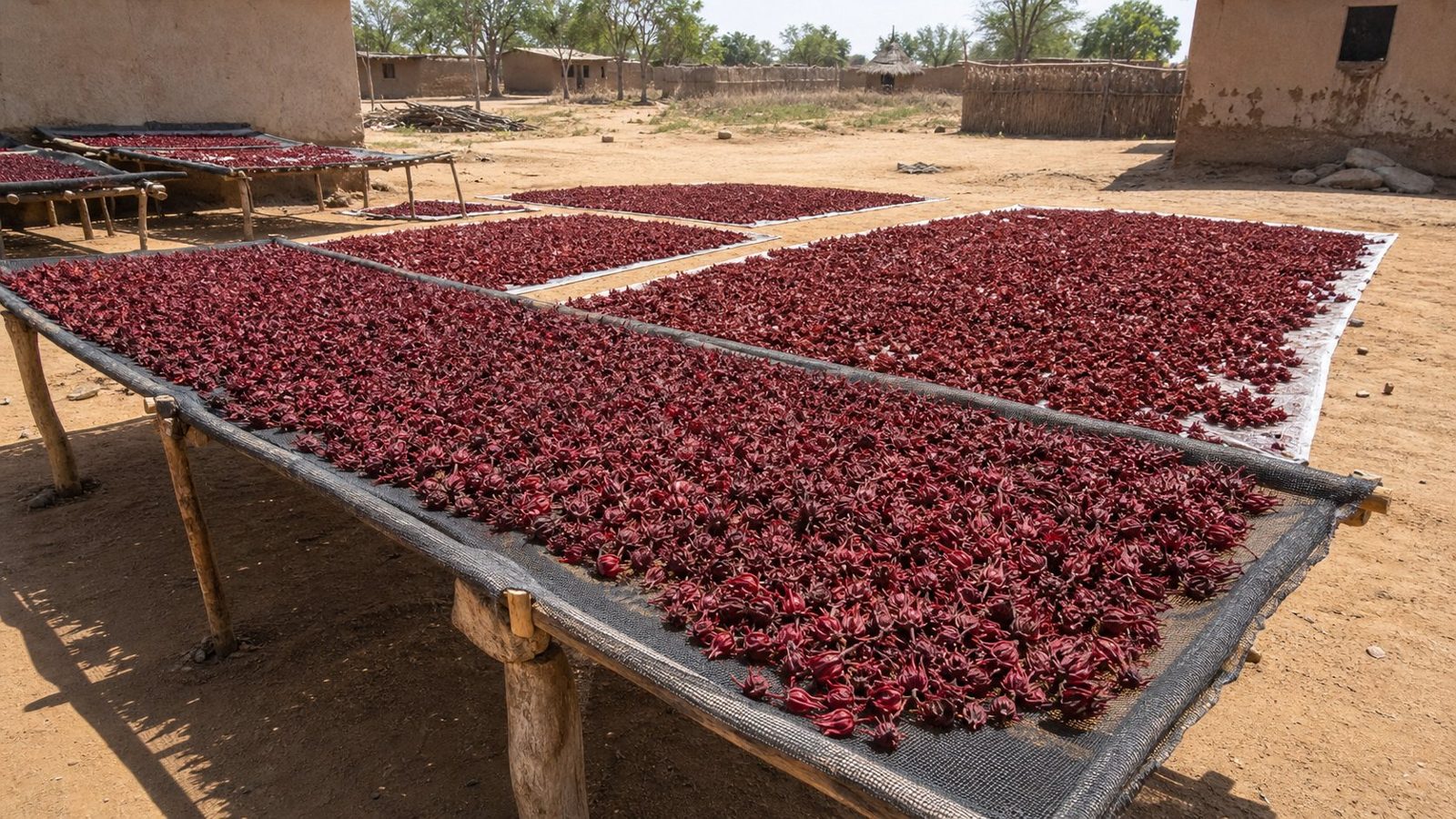
Roselle is an annual crop grown almost entirely by smallholders in Nigeria's northern savannah, and its calendar is set by the rains. Knowing that calendar helps you buy at the right moment for quality and price, and helps you plan shipments around the realities of drying, aggregation and port congestion.
Where it grows
The main producing states are Jigawa, Kano, Katsina, Bauchi, Borno, Yobe and Gombe, with meaningful volumes from Kebbi, Zamfara, Sokoto and parts of Kaduna and Plateau. Roselle is often intercropped with millet, sorghum or groundnut along field margins, which is why supply comes from many thousands of small plots gathered by village aggregators and then by regional traders in markets such as Kano and Hadejia.
Month by month
- May – July: planting with the onset of the rains. Early rains in the far north determine the planted area.
- August – September: vegetative growth and flowering. The crop is sensitive to waterlogging; flooding in the Hadejia–Jama'are basin can cut volumes.
- October – November: calyces swell and colour. Harvest begins in the drier north-east and moves west. Calyces are picked, de-seeded and sun-dried on mats and racks.
- December – January: peak harvest and drying. First new-crop lots reach Kano and Lagos warehouses; export loading starts in earnest. Prices are usually at their seasonal low.
- February – April: strongest export period. Sifting and bagging run at full capacity; the best Grade A colour is available now.
- May – September: warehouse stock only. Availability tightens, prices firm and older stock may show colour fade. Buyers with year-round programmes contract forward during the season to avoid this window.
Why the harvest window matters for quality
Hibiscus dried quickly in the dry Harmattan air of December–January has the deepest colour and lowest moisture. Lots harvested late or caught by unseasonal rain are darker brown and carry higher mould risk. Likewise, stock held through the hot months from May onwards gradually loses colour intensity. For premium tea and beverage use, book new-crop shipments for December–April loading.
Planning your purchase
Share your annual volume with us before the season starts and we can hold tonnage from the new crop at contract prices, with staggered shipments through the year. Talk to us about a supply programme.
Sourcing dried hibiscus from Nigeria?
Get a written quotation and specification within two business days.
More Insights
Ready to Source Export-Grade Dried Hibiscus from Nigeria?
Tell us your grade, tonnage, packing and destination port. Our export team will prepare a detailed FOB or CIF quotation and a sample plan.