
About Renamy Hibiscus Nigeria
An export-focused hibiscus supply company connecting Nigeria's roselle-growing communities with tea blenders, beverage producers, ingredient houses and extractors who need dependable quality, container after container.
Built to Make Nigerian Hibiscus Easy to Buy
Nigeria is the world's largest exporter of dried hibiscus, and the crop is one of the most valuable non-oil exports of its northern states. Yet for many buyers, sourcing here has meant uncertainty over cleanliness, moisture, pest control, food-safety testing, paperwork and communication.
Renamy Hibiscus Nigeria was established to close that gap. We are an export supply company — not a middleman passing on whatever arrives from Kano market — with a model built on direct relationships with farmer groups and aggregators in the hibiscus belt, our own intake, sifting and bagging operation, and a disciplined export process that treats laboratory testing, fumigation and documentation as seriously as the flower itself.
Our team combines on-the-ground knowledge of Nigeria's hibiscus-producing states with practical experience in export logistics from Lagos. That blend lets us answer the questions importers actually ask: what colour and cleanliness can you hold, how do you control moisture and insects, can you ship under the Mexico protocol or meet EU and FDA testing requirements, which documents will my bank and customs broker receive, and when will the container sail.
Our Vision
To be the Nigerian hibiscus export partner that international buyers trust first — recognised for clean, deep-red flowers, honest specifications and shipments that clear the border as contracted.
Our Mission
To connect Nigeria's hibiscus farmers with world markets through disciplined sifting and testing, professional export documentation and transparent communication at every step.
Our Values
Integrity in what we specify and ship. Fair dealing with the farming communities we buy from. Responsibility toward the soils and landscapes roselle depends on.
From Farming Communities to Your Port
Sourcing
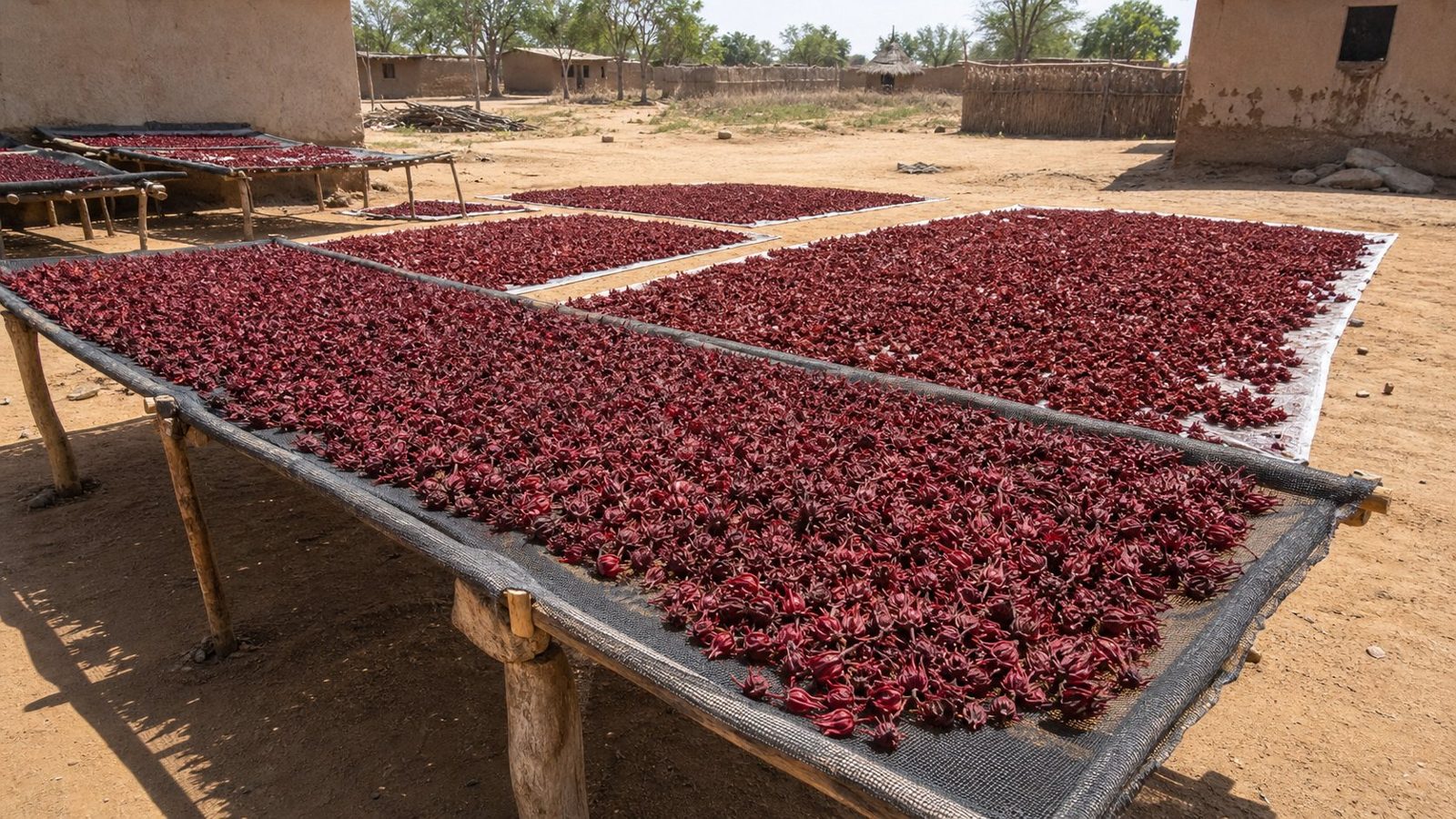
Dried, de-seeded calyces bought from known farmer groups and aggregators across Jigawa, Kano, Katsina, Bauchi, Borno, Yobe and neighbouring producing states.
Sifting & Grading
Moisture, colour and admixture on intake; screening, aspiration and hand-picking to contract cleanliness; cutting and milling for TBC and powder; NAQS inspection before bagging.
Testing & Packaging
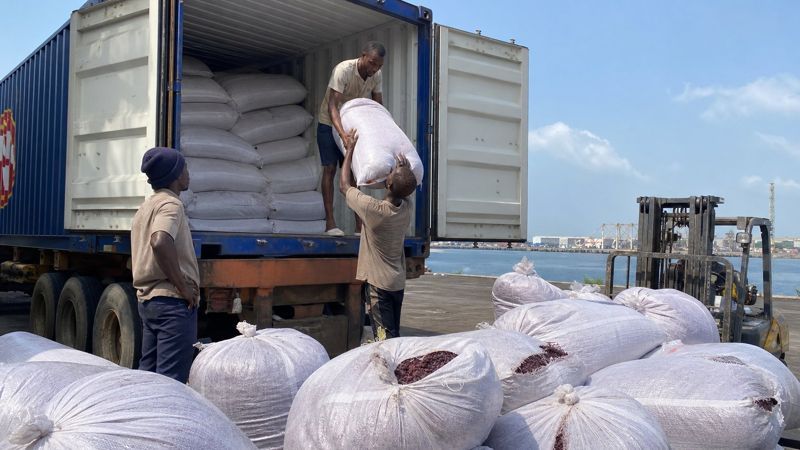
Laboratory sampling per lot; new 20–25 kg PP bags or 50 kg bales with liners where specified, stacked on pallets in a dry, pest-controlled warehouse until stuffing.
Export
Documentation, supervised fumigation, inspection coordination, customs clearance and lined-container loading at Lagos, with freight arranged to your destination on request.
Hibiscus Is a Smallholder Crop. We Treat the Farmers That Way.
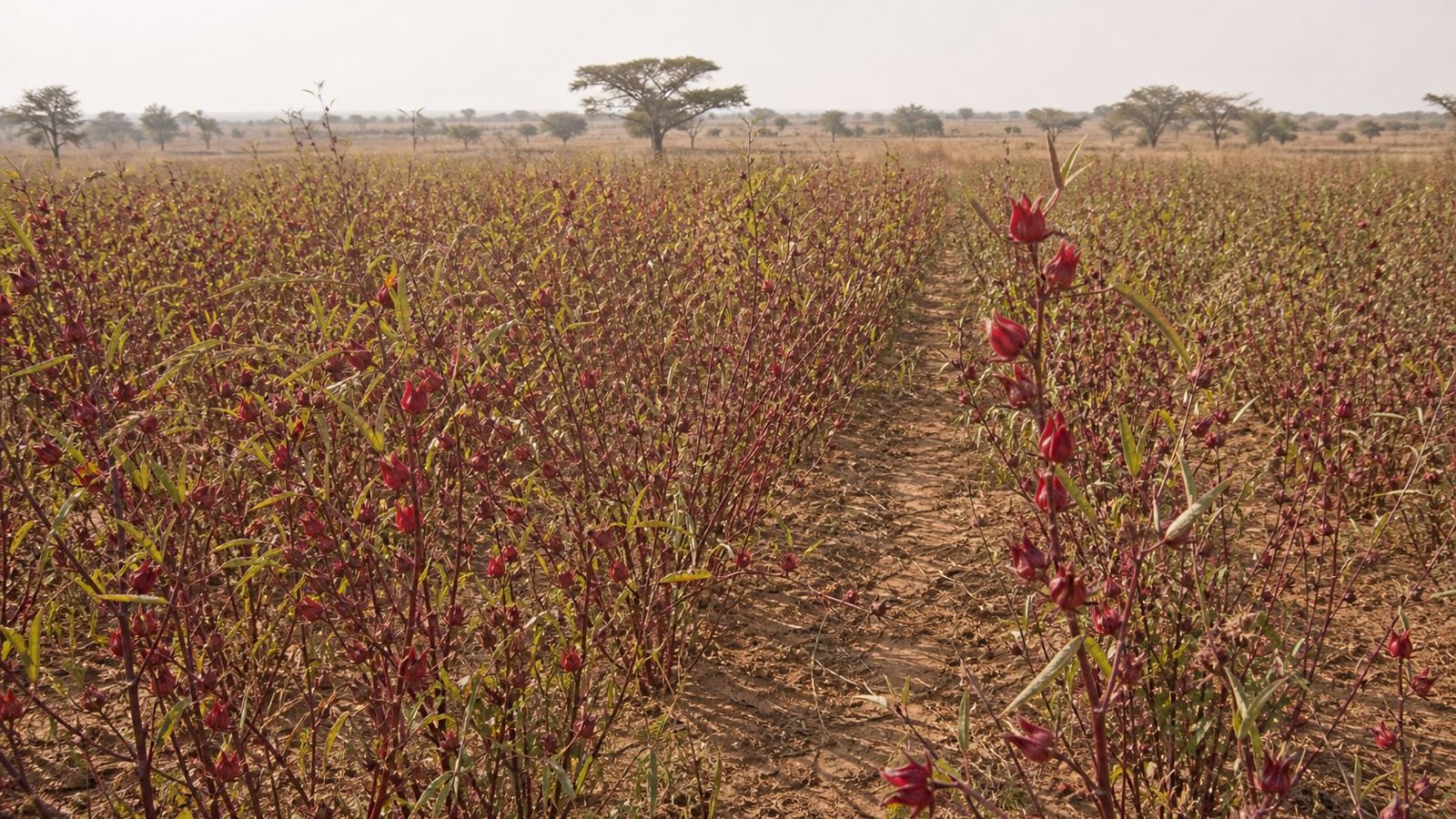
Nigeria's hibiscus is grown almost entirely by smallholder families, often along the margins of millet and sorghum fields in the dry north. The quality of the calyx and the future of the supply depend on how those farmers are paid, trained and supported. We buy through direct, repeat relationships with farmer groups, pay promptly and transparently against weight and quality, and share drying, de-seeding and storage guidance that lifts the colour, cleanliness — and the price — of what they sell.
We are also building the farm-level records that food-safety audits and sustainability programmes increasingly require. [Describe your specific farmer-support, traceability or sustainability initiatives here]
- Direct, repeat commercial relationships with farmer groups
- Prompt payment against weight and intake quality
- Drying and storage guidance to reduce mould and insect damage
- Openness to buyer audits and sustainability questionnaires
The Renamy Difference
Let's Discuss Your Hibiscus Requirements
Whether you are an established importer or evaluating Nigeria as a new origin, we will give you straight answers and a clear offer.