
Dried Hibiscus Flower Price per Ton from Nigeria: What Drives It and How to Read a Quote
Hibiscus has no exchange price, so quotes vary widely. This guide explains what actually sets the price of Nigerian hibiscus per tonne and how to compare offers like for like.
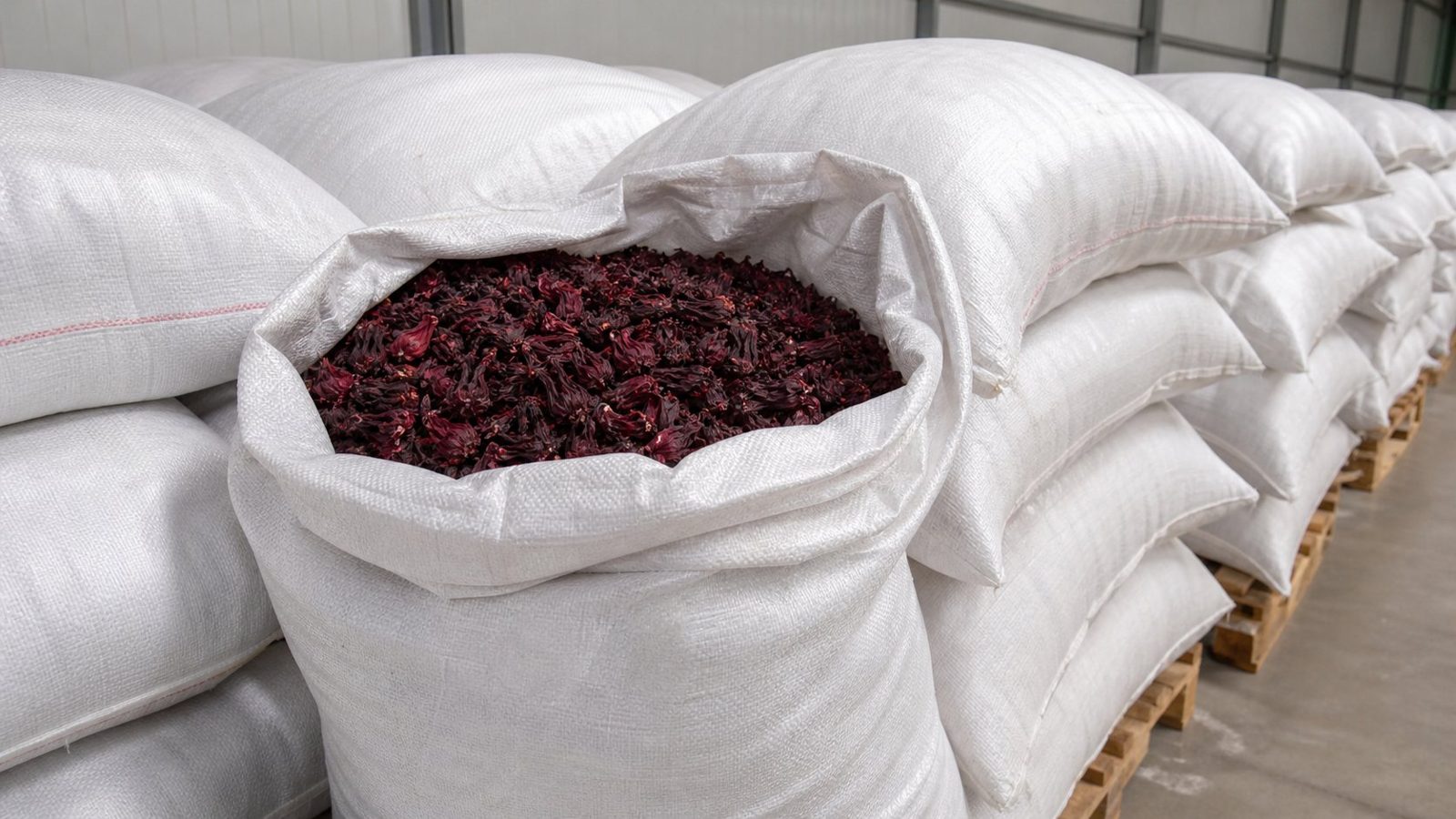
"What is your hibiscus price per ton?" is the first question every buyer asks, and the honest answer is "for which grade, when, and delivered where?". Unlike cocoa or coffee, dried hibiscus has no futures market; every price is negotiated for a specific lot. Understanding the moving parts will help you compare offers that look very different on the surface.
The crop
Nigeria produces the bulk of the world's traded dried hibiscus, mostly from Jigawa, Kano, Katsina, Bauchi, Borno and neighbouring states. A good rainy season produces a large, well-coloured crop and softer prices; drought, flooding or insecurity in the producing areas tightens supply quickly. Because almost all of the crop is harvested between October and December, prices are usually lowest around December–January and rise through the year as warehouse stocks shrink.
Demand
Mexico is by far the largest buyer, for agua de jamaica, followed by the United States, Germany and other EU countries, Egypt, Thailand and India. When Mexico buys aggressively — or when its import protocol changes — Nigerian prices move. The growth of hibiscus in wellness teas and natural colours in Europe and North America has added steady year-round demand.
Grade and cleanliness
Grade A sifted whole flowers carry a premium over Grade B of the same colour because sifting and hand-picking lose weight and cost labour. Tea-bag cut and powder are priced above whole flowers to reflect processing, but they ship more tonnes per container, which partially offsets the premium on a landed basis.
Logistics and the volume problem
Hibiscus is light: a 40' high-cube carries only about 10–12 tonnes of whole flowers, so ocean freight per tonne is high compared with dense commodities. A CIF price therefore includes a larger freight component than you may be used to. Compressed bales (Grade B) and powder improve container utilisation; ask your supplier what packing format each quote assumes.
Terms and currency
Quotes are almost always USD per metric tonne, FOB Lagos (Apapa / Tin Can Island) or CFR/CIF destination. Letter-of-credit business usually prices slightly higher than cash-against-documents to cover bank charges and confirmation costs.
How to compare quotes properly
- Same grade, same moisture and admixture limits, same colour description.
- Same packing (25 kg bags vs 50 kg bales changes freight per tonne).
- Same Incoterm and same destination port.
- Same documentation and treatment (fumigation protocol, lab tests, inspection) — these are real costs.
- Same shipment window — a December shipment and a June shipment are different markets.
We quote every enquiry in writing against a full specification so that you can make exactly this comparison. Request a current price and we will reply within two business days.
Sourcing dried hibiscus from Nigeria?
Get a written quotation and specification within two business days.
More Insights
Ready to Source Export-Grade Dried Hibiscus from Nigeria?
Tell us your grade, tonnage, packing and destination port. Our export team will prepare a detailed FOB or CIF quotation and a sample plan.